Measured Impact

Aarush Eco Tech focuses on outcomes that can be observed, audited, and reported—not cosmetic improvements.

Operational Impact

Smart monitoring and proactive servicing reduce overflow events, missed clean-ups, and manual supervision.

Measured Outcomes (Pilot Data):

  • 85% reduction in overflow incidents
  • 40% improvement in servicing efficiency
  • 90% reduction in public complaints
  • 60% reduction in emergency cleanup costs

How It Works:

Real-time fill-level monitoring enables proactive servicing before bins reach capacity. AI-optimized routes reduce unnecessary visits to empty bins, focusing resources where needed most.
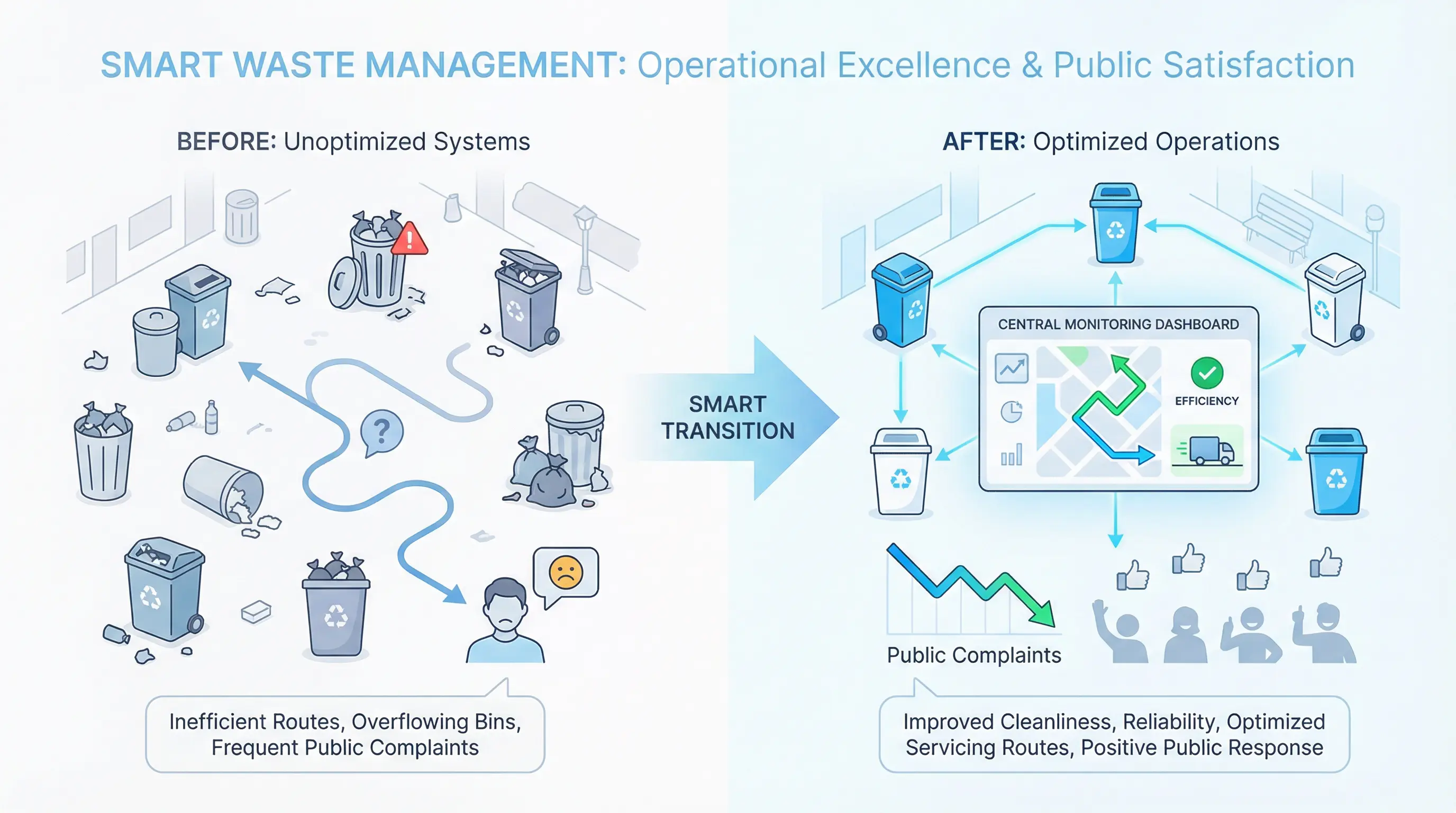
Operational waste efficiency improvements
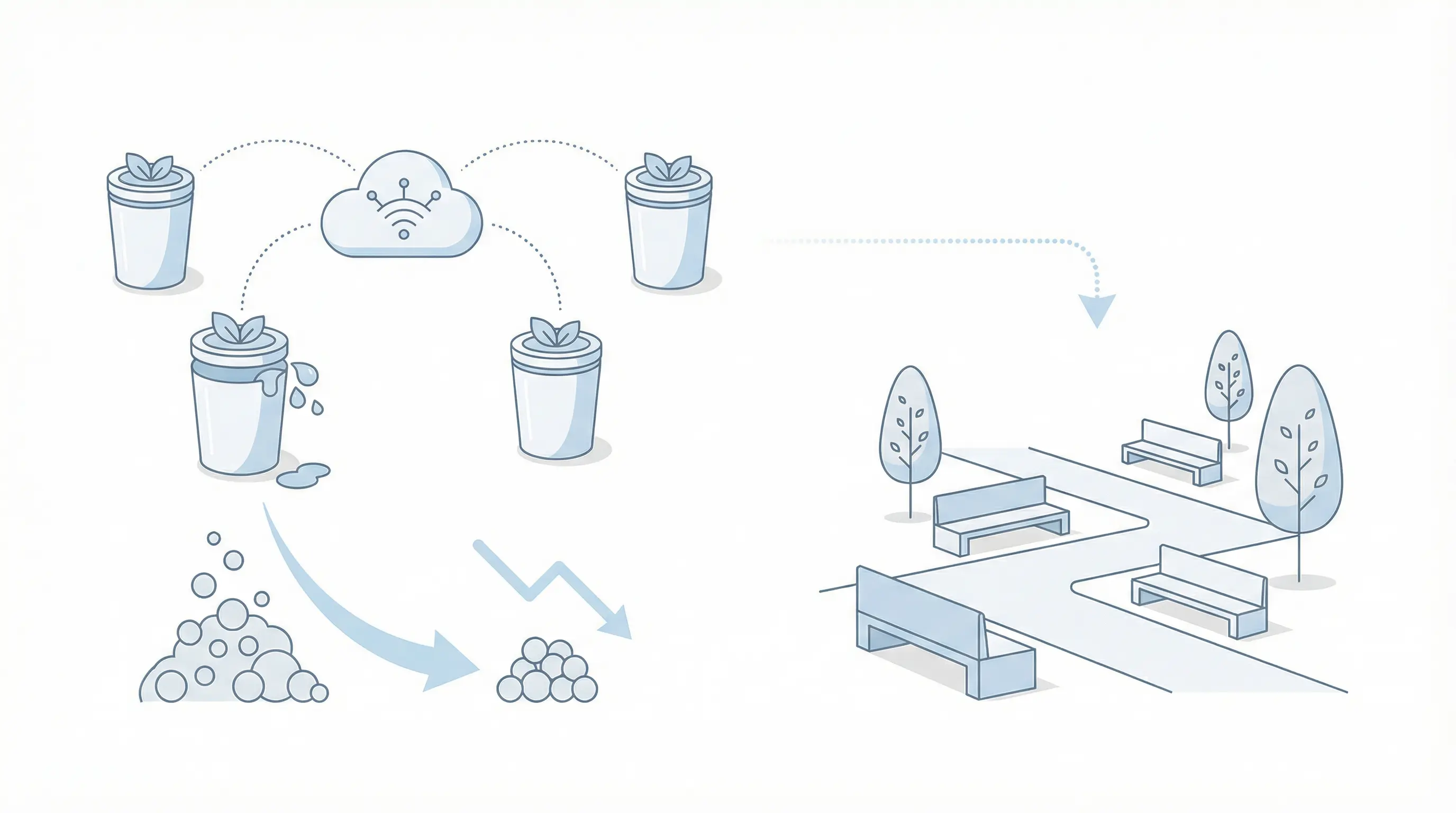
Environmental impact of smart waste management

Environmental Impact

Better visibility into waste patterns supports responsible handling and reduces secondary pollution caused by overflow and spillage.

Measured Outcomes (Pilot Data):

  • 72% reduction in secondary pollution from spillage
  • 30% reduction in collection vehicle emissions
  • 45% increase in segregation compliance
  • 100% data coverage for waste audits

How It Works:

Route optimization reduces vehicle trips and fuel consumption. Real-time monitoring prevents overflow-related pollution. Segregation tracking ensures proper waste categorization.

Governance & ESG Impact

Aarush Eco Tech enables transparent, auditable waste operations aligned with institutional ESG and sustainability objectives.

What You Get:

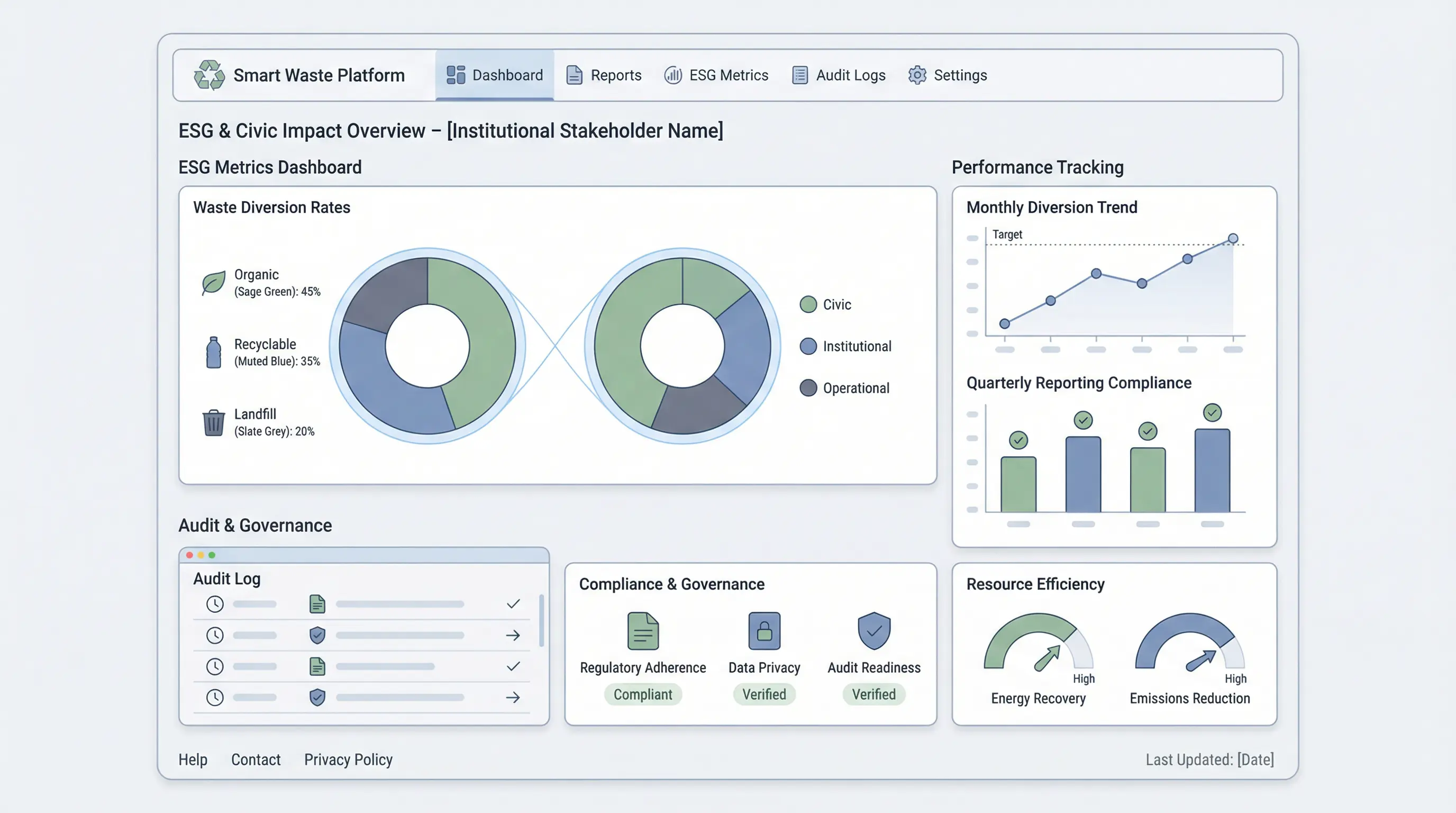
  • Data-backed reporting for sustainability audits
  • Operational accountability with 99.2% uptime SLA
  • Audit-ready documentation for compliance
  • ESG metrics for annual reporting
  • Green certification support (LEED, IGBC, etc.)

How It Works:

Automated data collection provides complete traceability. Monthly reports document performance against targets. All operations are logged and accessible for audits.

ESG reporting and governance dashboard

Key Performance Indicators

All impact metrics are measured, tracked, and reported monthly. Data is based on pilot deployments and engineering performance.

Overflow Prevention

85%

Reduction in overflow incidents through proactive monitoring and servicing.

Efficiency Gains

40%

Improvement in servicing efficiency through AI-optimized routing.

System Reliability

99.2%

Average system uptime across all deployed smart bins.

Pollution Reduction

72%

Reduction in secondary pollution from waste spillage and overflow.

Cost Savings

30%

Reduction in collection vehicle emissions through optimized routes.

Complaint Reduction

50%

Reduction in public complaints related to waste management.

Impact Measurement Methodology

All impact claims are based on pilot deployment data, engineering performance metrics, and third-party validation where applicable.

Data Collection

Real-time sensor data is collected every 30 minutes from all deployed bins. Data includes fill levels, servicing events, alerts, and system status.

Baseline Establishment

Before deployment, we establish baseline metrics through site observation and stakeholder interviews. This provides comparison points for impact measurement.

Ongoing Monitoring

Performance is tracked continuously throughout pilot and operational phases. Monthly reports compare actual performance against baselines and targets.

Third-Party Validation

Where requested, impact claims can be validated by independent auditors. All data is audit-ready and traceable.

From Infrastructure to Outcomes

These outcomes are driven by the Smart Waste Infrastructure Platform and validated through structured pilot deployments across high-footfall environments.

Request a Pilot to Measure Your Impact